Signs your building’s electrical panel needs a closer look
Every commercial property relies on an electrical panel that distributes power to lighting, equipment, and HVAC systems. Over time, panels can show signs of strain that hint at deeper issues. Spotting those signs early can prevent unexpected downtime and keep operations running smoothly. Here are the key indicators that a panel may need professional evaluation.
Frequent breaker trips that interrupt the workday
A circuit breaker that trips now and then is doing its job. When the same breaker trips repeatedly, or when several breakers trip often, the panel may be overloaded or have a fault inside the bus bar. A facility manager should track which circuits trip and under what load. If the trips happen when only a modest number of devices are running, the panel’s capacity may be stretched too thin. An upgrade to a higher-rated panel or a rebalancing of loads could be necessary.
Warm or hot panel enclosures
Touch the outside of the panel enclosure. If it feels warm to the hand, heat is building up inside. Overheating shortens the life of breakers and can damage wiring insulation. The cause might be loose connections, corrosion on the bus, or simply too much current flowing through the panel. A professional can measure the internal temperature and check the tightness of every connection. Ignoring a hot panel risks a fire.
Burning smells or visible scorch marks
A sharp, acrid smell near the panel is a serious warning. Even a faint odor of hot plastic or ozone means something inside is breaking down. Open the panel only if you are qualified to do so; otherwise, call an electrician. Scorch marks on the panel face or on any breaker switch indicate past arcing. Arcing can destroy a breaker and damage the panel bus. The source of the heat must be identified and repaired.
Flickering or dimming lights on several circuits
When lights flicker across multiple rooms or zones that share the same panel, the problem is rarely a single bulb. It points to a loose connection at the panel’s main lugs or a failing main breaker. A voltage drop under load can also cause lights to dim when an appliance kicks on. These symptoms suggest the panel’s supply is not stable. A load study and a panel inspection will reveal whether the panel can deliver the power the building needs.
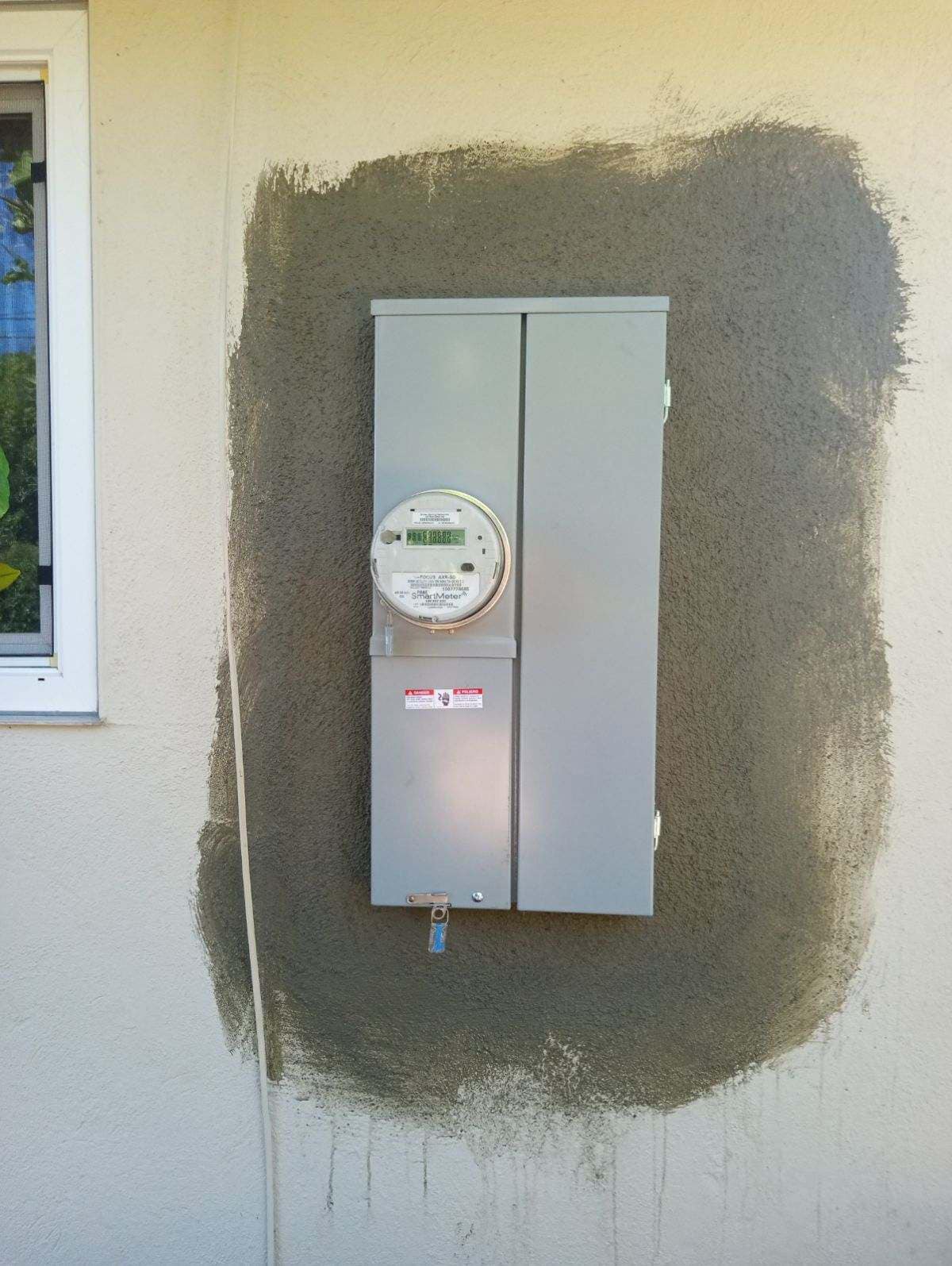
Panel age and outdated technology
Electrical panels have a useful life of roughly 25 to 40 years, depending on the environment and maintenance. Older panels may use obsolete breaker designs that are hard to replace. Some older panels lack the physical space to add new circuits. If your building has an aging panel that cannot accept new breakers or cannot handle modern equipment loads, a replacement is worth planning. A professional evaluation can confirm whether the panel still meets code and can support a business electrical upgrade.
Rust, corrosion, or water damage inside the enclosure
Moisture inside a panel causes corrosion on metal parts and can create tracking paths for electricity. Rust on the enclosure, on the bus bars, or on breaker terminals reduces conductivity and raises resistance. High resistance generates heat. If the panel is in a basement, near plumbing, or in a space that has flooded, inspect it for signs of moisture. Even a small amount of surface rust calls for a professional to clean and treat the affected parts or replace the panel.
Buzzing, humming, or crackling sounds
A healthy electrical panel is quiet. Any audible buzzing or humming usually comes from a loose connection or a vibrating breaker. Crackling is more urgent, it indicates arcing. Arcing can melt wire insulation and start a fire. If you hear these sounds, do not open the panel. Shut off the main breaker if it is safe to do so and call a licensed electrician immediately. The sound alone is a strong reason for a professional evaluation.
Unexplored constraints on commercial electrical capacity
Many businesses add equipment over time without reviewing the panel’s total load. A distribution panel that was adequate ten years ago may now be near its limit. A professional load calculation compares the sum of all breaker ratings and the actual running load to the panel’s rating. If the numbers show the panel is at or above 80 percent of its rated capacity, it is time to consider an upgrade. Understanding your commercial electrical capacity helps you plan expansions without risking outages.

What a professional evaluation includes
A thorough panel evaluation covers more than a visual check. An electrician will:
- Measure voltage and current on each phase to identify imbalances.
- Torque every connection to the manufacturer’s specification.
- Thermally scan the panel to locate hot spots.
- Review the load schedule and compare it to the panel’s rating.
- Check the condition of the main breaker and each branch breaker.
After the inspection, you receive a report that lists issues and recommends repairs or replacements. This information is essential for planning a business electrical upgrade.
Planning for growth with a panel upgrade
If your building is undergoing a tenant improvement or adding new equipment, the existing panel may not have room for additional circuits. A modern panel with more breaker slots and a higher bus rating can accommodate growth. Upgrading to three phase power, if your building does not already have it, can increase capacity and improve motor performance. A professional evaluation will tell you whether your current panel can support the new loads or whether a replacement is the better path.
An electrical shutdown is often required to safely replace a panel. Planning the work during a low-activity period reduces disruption. A facility manager should coordinate with tenants and schedule the shutdown well in advance. The evaluation report gives you the technical basis for that planning.
Knowing the warning signs and acting on them keeps your building safe and your business running. A professional evaluation is a small investment compared to the cost of an unexpected failure. If you see any of the signs described here, call a licensed electrician to assess the panel and recommend next steps.